


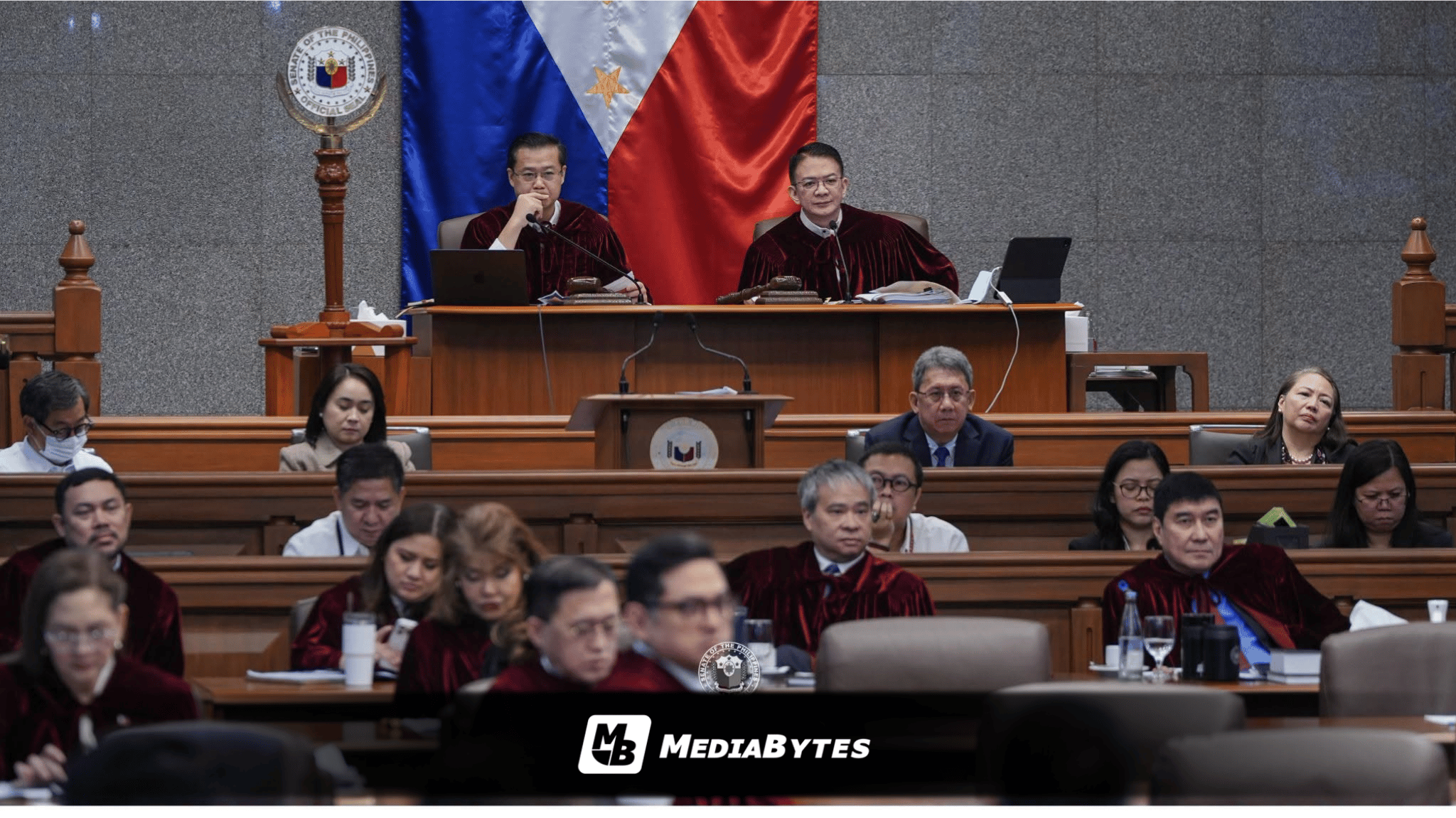
MANILA, Philippines — The Senate Impeachment Court on Wednesday, September 30, commended the Supreme Court’s decision to throw out three separate petitions contesting the tribunal’s calculation of the two-thirds vote needed to convict Vice President Sara Duterte.
“The Senate Impeachment Court acknowledges the decisive action of the Supreme Court En Banc dismissing the separate petitions filed by former Executive Secretary Vic Rodriguez, Berteni Causing, and Atty. Ernesto Francisco, Jr., which sought to nullify its September 23 ruling on the two-thirds voting threshold,” stated Atty. Reggie Tongol, spokesperson for the impeachment court.
Tongol emphasized that the High Tribunal’s decision reinforces the legitimacy of the Senate’s authority.
“The Supreme Court’s prompt dismissal of these cases on procedural grounds—specifically lack of standing and prematurity—effectively confirms the interpretations and proceedings of the Senate Impeachment Court are constitutionally bulletproof,” Tongol stressed.
He added that the dismissal affirms the legislative court’s institutional independence from external interference.
“By junking these challenges, the Highest Court has drawn a definitive firewall around the independence of the Senate as an Impeachment Court, confirming that its proceedings cannot be held hostage by premature judicial meddling or collateral litigation,” he said.
“The Impeachment Court’s September 23 ruling stands undisturbed and shall continue to perform its constitutional mandate to solely try and decide the impeachment case before it without unnecessary stalling or external distractions,” Tongol reiterated.
The controversy stems from a September 23 vote where the impeachment tribunal determined that the phrase “all members of the Senate” under Article XI, Section 3(6) of the Constitution applies exclusively to senators who are legally and factually capable of participating when the vote occurs.
The motion to alter the original 16-vote requirement passed with 13 affirmative votes. Senator Francis “Chiz” Escudero, presiding over the tribunal, registered the sole dissenting vote, while six senators allied with the Vice President abstained.
The voting took place following oral arguments between prosecution and defense counsels, as well as consultation with amici curiae brought in to provide legal insights on the constitutional requirement.